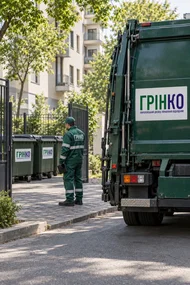
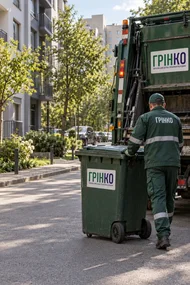
A service for your property's daily needs
Regular collection suits properties where household waste accumulates continuously: a residential building, office, shop or venue. For each address, identify the collection point, a responsible person and access for the refuse vehicle.
Waste from renovation, old furniture and branches requires separate agreement. Do not include it in the normal household waste volume without checking the terms.
Not sure which schedule your property needs? We can help you choose.
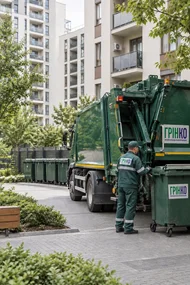
For homeowners associations and residential developments
Containers, courtyard access and rules for residents — within one agreed process.
For homeowners associations and residential developments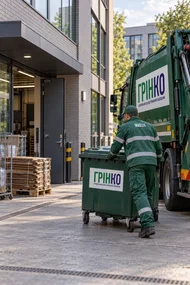
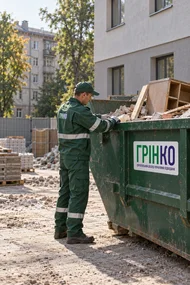
One-off collection after renovation
Construction and bulky waste have a separate ordering process.
One-off collection after renovationWhat determines the service volume
| Parameter | What to establish |
|---|---|
| Accumulation | How much waste is generated between collections and whether there are peak days. |
| Containers | The volume, quantity and condition of existing containers; whether rental or purchase is needed. |
| Frequency | Which schedule suits the property's usual workload. |
| Vehicle access | Barriers, gates, uneven surfaces and other access conditions. |
| Sorting | Which materials can be collected separately from mixed waste. |
From the address to the first collection
Describe the property
Provide the address, property type, containers and preferred frequency. If the quantity is unknown, describe the current situation.
Agree the terms
Service availability at the address, access, waste composition, price and schedule are checked.
Prepare the site
Appoint someone responsible for access and remove obstacles on the way to the containers.
Agree the start
Record the arrangements and start date before the first service.
Sorting starts nearby
Clean cardboard, plastic, glass and metal should not automatically be mixed with other waste. First establish which materials your property generates, then agree how to collect them.
Separate collection requires clear labels and instructions. The financial result depends on waste composition and the agreed service terms.

Organise separate collection
Choose a collection scheme and explain the rules to residents or staff.
Organise separate collection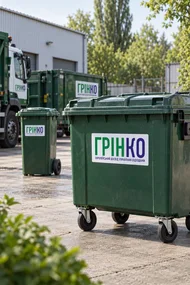
Choose a container
Compare rental and purchase and check compatibility with the site.
Choose a containerQuestions about regular collection
Can we use our own containers?
Provide their volume, type and condition when agreeing the service. Compatibility must be checked before work begins.
What should I do if a container overflows?
Provide the address and describe when overflow occurs. For recurring excess, review the capacity or schedule; a one-off additional collection is agreed separately.
What determines the price?
The address, container specifications, schedule and access conditions. Prepare these details for an estimate; final terms are confirmed in the offer.
Do you still have questions about regular collection? Tell us about your situation.